

When Church & Mental Health Seem Incompatible
There are Sundays when church feels like home. Then there are Sundays when getting through the door feels like a spiritual version of Total Wipeout. The foyer is loud, an enthusiastic welcomer is approaching with both arms open, and somebody on stage says the 6 most terrifying words in modern Christianity: “Turn to the person beside you.”
When your mind is already fighting you, church can feel like one more place where you are failing. I have lived through depression and panic attacks. I know it is possible to love Jesus, believe deeply in the church and still find your mind refusing to cooperate. Sometimes belief is not the thing you have lost. You have lost the capacity to participate in all the ways church normally expects.
So what do we do when mental illness and church stop feeling compatible?

Does God Make Empty Threats?: When God says judgement is coming… and then it doesn’t
A little while ago I wrote an article called Does God Change His Mind? Yes, No, Maybe? I finished it reasonably happy with where I’d landed. Then my brain did what my brain tends to do and found another problem.
If God knows everything, if He doesn’t change His mind in the way that we do, and if His character is the same yesterday, today and forever, what are we supposed to do with those moments in Scripture where God announces judgement… and then doesn’t do it? Because He knew He wasn’t going to do it. And if God knew He wasn’t going to do the thing He said He was going to do, surely what He said was… a lie?
Obviously, I’m not foolish enough to suggest God is a liar. Apart from being a fairly catastrophic theological hill to die on, Jesus describes Himself as the way, the truth and the life. Titus tells us God does not lie. Hebrews goes further and says it is impossible for God to lie. So I’m fairly confident the problem isn’t with God. Which means, rather inconveniently, it might be with my argument.
But the argument seems logical. God knows the future. God says something will happen. God knows it won’t happen. It doesn’t happen. Therefore God said something He knew wasn’t true. Surely that’s lying… right?

Why Does God Care What I Do With My Money?
Nothing makes a room full of Christians suddenly fascinated by their own shoelaces quite like somebody saying, “Let’s talk about money.” We’ll happily discuss beasts in Revelation and whether drums are biblical, but mention bank accounts and everyone braces for an offering thermometer and urgent references to the church roof.
It’s often said that, after the kingdom of God, money and possessions were Jesus’s most talked-about subject. The exact ranking depends on how we categorise his parables, but the point stands: Jesus returned to money because it competes for our trust.
Money moves far beyond currency. Most of us exchange forty hours or more every week—chunks of our limited lives—for it. We once received scraps of metal and paper; now we get a number on a screen which shrinks after Tesco and a strange noise from the boiler.

Called, Gifted & Occasionally Out Of Our Depth
There is a dangerous moment in many Christian conversations. Someone tells us something painful. Their marriage is falling apart. Old trauma has resurfaced. Their mental health is unravelling. They are frightened by something happening in their body.
We care. We want to help. Then, somewhere between, “I’m so sorry,” and, “Let me pray for you,” we accidentally appoint ourselves marriage counsellor, trauma specialist, medical consultant and, occasionally, minor prophet.
Christians are capable of extraordinary compassion and extraordinary confidence after one podcast and half a book. Give us a Bible, a mug of tea and somebody in distress, and we feel an irresistible need to produce an answer.
It comes from a good place. But you can assemble an IKEA wardrobe with a loving heart and still put the doors on backwards. Sincere advice can also cause damage when it travels beyond our ability

Let the Father Speak: Learning to Listen to the God Who Speaks
A while ago, I wrote an article called God Doesn’t Need, You But He Wants You based on a song I’d written called You Don’t Need. It was about a truth I find both deeply humbling and wonderfully freeing: God doesn’t need us, but He absolutely wants us.
Today, I felt compelled to reflect on another one of my songs. This one’s slightly older. I wrote it just under a year ago, and it’s called Let the Father Speak (Listen Here).
The song came out of something I’ve had to learn and re-learn more times than I’d care to admit: I am very good at asking God to speak while simultaneously making it almost impossible for me to hear Him.
I can pray, “Lord, would You speak to me?” and then give the Creator of the universe approximately twelve seconds before checking my phone. Nothing yet, Lord? Fair enough. Instagram it is.
But Let the Father Speak isn’t really a song asking a reluctant God to say something. It’s about learning to quiet a noisy, striving heart long enough to listen. Because God has always been a speaking God.

A Titanic Mission & A Re-ignition Of The Great Commission
A few weeks ago, my mate Andy, an elder in one of our church plants in North Wales, was telling me about a book he read about a fella called John Harper.
I came home, and as I read more I was blown away. I mean…wow…what a guy!
Harper was a 39-year-old Scottish Baptist pastor, a widower and father to six-year-old Annie Jessie, known as Nana. In April 1912, he boarded the Titanic with Nana and Jessie Leitch, who helped care for her. They were travelling to Chicago, where he had been invited to preach.
On the night of 14 April, the Titanic struck an iceberg. What he did next is a remarkable example of devotion to Christ.

The Divine Call to Say No: Knowing When Enough Is Enough
God knew when to stop creating.
Michelangelo knew when to put down his chisel and declare that David was finished.
Leonardo da Vinci is a less convincing example. He appears to have kept fiddling with the Mona Lisa for years. You can almost hear someone saying, “Leonardo, mate, the smile is fine. Put the brush down.” Perhaps he belongs with the rest of us.
Because we are often rubbish at knowing when enough is enough.
We squeeze another commitment into a groaning diary. We carry responsibilities after the season has ended. We continue working on things that were perfectly good three hours ago. We say yes because there is a need, a gap or an awkward silence in which nobody else volunteered.
Then we stagger home exhausted and ask God to bless the life we constructed without consulting him.

Raising Teenagers & Other Extreme Sports!
If I could go back ten years and give myself some advice about raising teenagers, I wouldn’t tell myself a thing. Because if I’d known what was coming, I’d probably have moved into the shed.
There are extreme sports, and then there is raising teenagers. Skydiving. Base jumping. Free climbing. White-water rafting. All activities involving significant risk, occasional screaming and the possibility of wondering why on earth you agreed to this in the first place. Amateurs. Try innocently saying something to a teenager and discovering that, unbeknown to you, you’ve just wandered into an emotional minefield. “It’s not funny!” “You’re being mean!” “What? What did I say?” Apparently this is the wrong question. So in an attempt to defuse this emotional landmine you try explaining what you meant. Wrong button. Perhaps humour will defuse the situation. Definitely the wrong button. You defend yourself. Worse. You offer a hug. Absolutely not. Eventually parenting becomes the emotional equivalent of pressing random buttons on a nuclear reactor and hoping one of them turns the alarm off before the whole thing goes critical.

How to Disagree Well: Knowing Which Theological Hills to Die On
Christians have never agreed about everything.
Give two believers a Bible, a pot of coffee and enough time, and eventually they will disagree about spiritual gifts, women preaching, what heaven is like, whether Christians should drink alcohol, and whether the latest controversial politician is the Antichrist or merely an unpleasant prat.
Some disagreements matter enormously. Others matter, but not enormously. Some barely matter at all, although you would never know it from the number of angry Facebook comments they generate.
The challenge is knowing the difference.

8 Lies Exhausted People Believe
Exhaustion is a surprisingly convincing liar.
It doesn’t simply make us tired. It distorts how we see ourselves, other people and God. Temporary feelings begin to sound like permanent facts. Minor problems become catastrophes. By 10:30 p.m. we’re considering quitting our job, leaving the church and moving to a cottage in Scotland where nobody can ask us to organise anything ever again.
When we’re rested, we can recognise that our thoughts may be slightly dramatic. When we’re exhausted, every thought arrives wearing an expensive suit and carrying a clipboard, with all the confidence of Harvey Specter from Suits.
“You’re a fool if you cant see this is true,” it says. But quite often it’s persuasion far from true.

Boys With Beards: Time to Man Up?
There is a certain glory to a good beard.
Some are majestic, cultivated with patience and wisdom. Others look like someone fell face first on the floor of the barbers and hoped for the best. And when you picture the great men of faith, it’s hard not to imagine spectacular facial furniture. Moses? Definitely beard. John the Baptist? Surely he needed a risk assessment for his wild whiskers!
Now, before anyone gets twitchy, this is not a theology of beards. And just to be clear, this is not an attack on young men. It is an encouragement towards godly manhood. Not a finger pointed in condemnation, but a hand of brotherhood extended by a middle-aged geezer who wishes he had learned some of this stuff much sooner in life.
But here’s the point: facial hair is not the same thing as maturity

Does God Change His Mind?: Yes…No…Maybe?
Some questions sound simple until you actually try to answer them. Then you realise they are less like a tidy little theological puzzle and more like trying to untangle Christmas lights that were clearly packed away by someone who wants to make you suffer. Too soon for a Christmas reference?
“Does God change his mind?” is one of those questions, so don’t expect me to have a nice tidy completely satisfactory answer in this short article, but I’m going to give it a crack anyway.
You see, in number of places in the Bible, God seems to change course. Moses prays, and God relents from judgment. Nineveh repents, and God does not bring the disaster Jonah preached about. Hezekiah prays, and his life is extended. There are moments where God seems to respond, reconsider, relent, and act differently because people pray, repent, or cry out to him.
But then, on another page, the Bible says God does not change. “I am the Lord, and I do not change” in Malachi 3:6. “God is not a man, so he does not lie. He is not human, so he does not change his mind” in Numbers 23:19. Then Hebrews 13:8 tells us, “Jesus Christ is the same yesterday, today, and forever.”
So which is it?

You Are Not the Main Character: Stepping Out The Spotlight
Most of us would never claim to be the centre of the universe. It doesn’t take long to notice that an annoyingly large amount of it keeps failing to organise itself around our preferences.
The traffic is too slow. The coffee is too weak. The weather is too hot, or too cold. The sermon is too long. The worship is too loud or not loud enough. The person sitting in front of us has raised both hands and is now blocking the words on the screen (I think I’m often that guy for those sat behind me).
Even our prayers can sound as though God has been invited into our story as a supporting character. His role is to open doors, remove difficulties, improve our circumstances and help the plot reach the ending we had already chosen.
There is only one small problem…You are not the main character!

Why Christians Need More BBQs
There are few things in life better than a BBQ on a beautiful day. Mates in the garden, burgers on the grill, an ice-cold beer in hand, and one man standing proudly over the flames like he’s finally found his calling. It’s legit the only kind of cooking most fellas actually want to do. Put the same man in a kitchen and he’s “just keeping out of the way.” Put him in front of a BBQ with a set of cheap BBQ tools and suddenly he’s Gordon Ramsay in cargo shorts.
And honestly, I’m here for it.

Fired Up, Not Burned Out
There is a famous moment in The Apprentice when Lord Sugar leans forward, points across the boardroom, and says, “You’re fired.”
In that world, being fired means you’re out. Opportunity gone. Dream over. Time for the awkward taxi ride home while pretending this was all part of your “personal growth journey.”
But Acts 2 gives us a very different kind of fired…

Left Behind: The Unspoken Cost Of Church Planting
I love church planting. I love the vision. I love the faith. I love the stories of lives transformed, communities reached, and new gospel communities established in places that desperately need them. Church planting matters because people matter. Every church plant represents the hope that more people might hear the gospel, more disciples might be made, and more worship might rise to God from places where it previously did not.
But there is a side of church planting that rarely gets talked about.
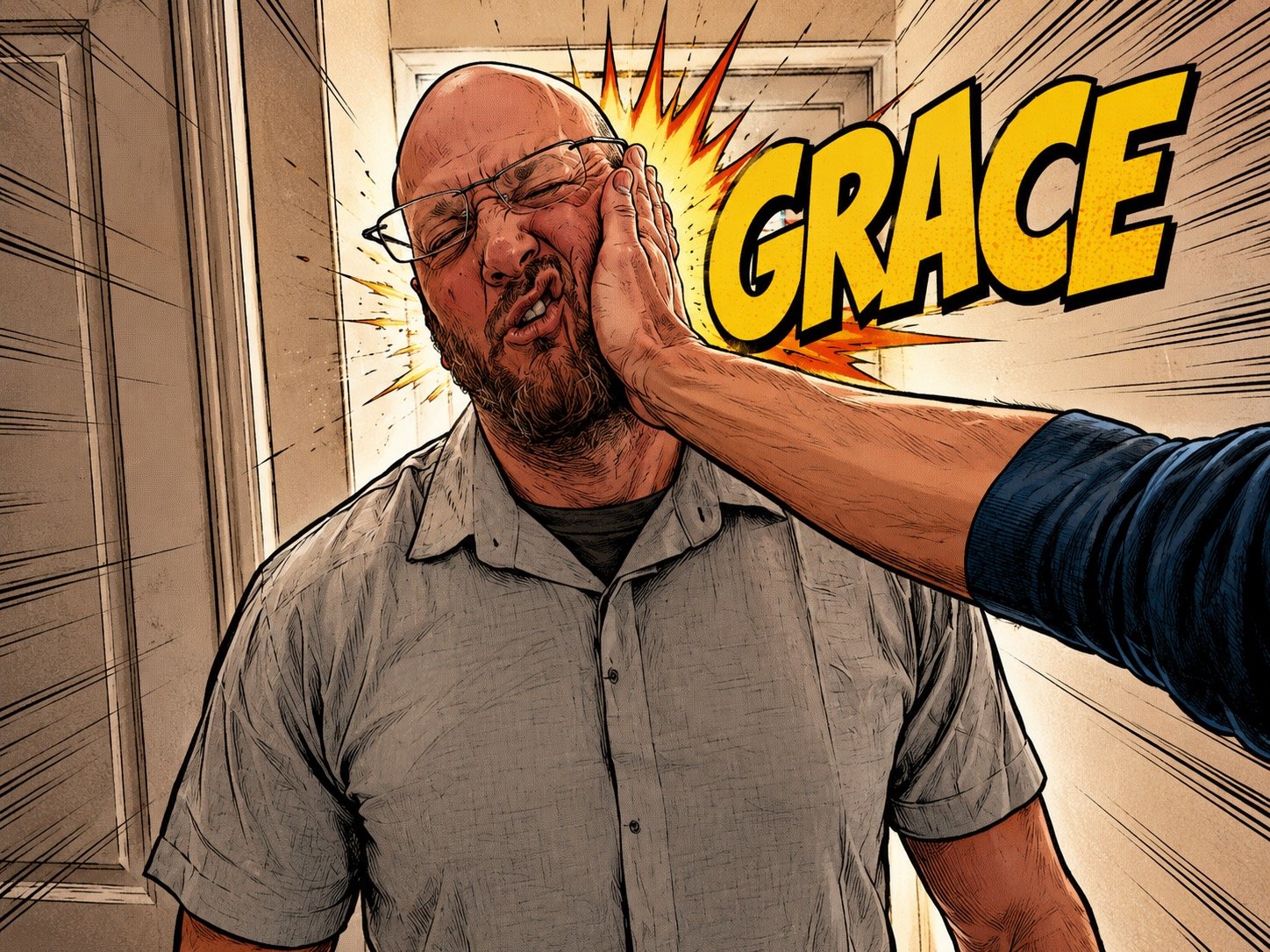
Slapped In The Face With A Handful Of Grace: Gods Discipline
Nobody Is Queuing Up for Discipline
Let’s be honest, nobody hears the words “God’s discipline” and thinks, “Lovely. Sign me up. That sounds like a cracking afternoon.” Most of us instinctively think, “Oh no.” We imagine trouble, punishment, and God stood over us with crossed arms and disappointed eyebrows.
But Hebrews 12 says, “For the Lord disciplines those he loves.” That changes the whole feel of it. God’s discipline is not the opposite of grace. It is one of the ways grace reaches us.
That is why I’ve called this post “Slapped in the Face with a Handful of Grace.”

When Helping Stops Being Helpful?
We christians are generally pretty decent at helping. Need someone to move house? We’ll turn up with a van. Need a meal after surgery? You’ll have enough lasagne in your freezer to survive a minor apocalypse. Need prayer, encouragement, practical support, a listening ear, or someone to stack chairs after an event? Christians have been volunteering for that sort of thing since somewhere around Acts chapter 2.
And that’s a good thing. The Church should be known for generosity, compassion, kindness, and service. We follow a Saviour who washed feet, fed crowds, healed the sick, welcomed outsiders, and gave His life for others. If Christians aren’t helping people, we’re doing something wrong.
But recently I’ve been reflecting on a question that makes me slightly uncomfortable: when does helping stop being helpful?

“When Im With You I Feel Like Im With My Father”: GoAlbania Reflection
Last week I joined a team going to Albania. Our mission trip to Albania began, as all great spiritual adventures do, with a delay at Manchester Airport. It was only an hour, which by Ryanair standards probably counts as a minor miracle.
We’d left the UK during a scorching heatwave, so travelling somewhere even hotter felt slightly surreal. Most of us met for the first time at the airport and, to my enormous relief, everybody seemed surprisingly pleasant. This was important because we were about to spend a week living together in temperatures of around 37 degrees.
Our destination was Berat, a beautiful Albanian town surrounded by mountains. Mountains are lovely to look at, but they also appear to prevent anything resembling a breeze from reaching the town. Thirty seven degrees without wind feels closer to 45, which meant we would spend much of the week smelling like the armpit of a sweaty giant.

Obsessed or Neglected?: How Jewish Is Christianity?
We All Know That One Person…Every church has at least one. You know the person I mean.
Somewhere along the line they discovered the Jewish roots of Christianity and got a little carried away. What started as a healthy interest in Israel somehow became a borderline fixation.
Now before anyone gets upset, the Jewish roots of Christianity are absolutely a thing. The problem comes when people start treating them as though they're the whole thing.
Some people are only a hop, skip and a jump away from changing their name to Shiloh, turning up to church in a skull cap, and wondering whether a prayer meeting that doesn't include praying for Israel is really a prayer meeting at all.